Results Viewer


|
Results Viewer |
|
|
Standalone DesignBuilder Results Viewer The Results Viewer is a separate application which can be used to view EnergyPlus results stored in one or more .eso files. It can be downloaded from the main Downloads > Software area of the DesignBuilder website. When installed the application allows you to view any results contained within EnergyPlus .eso and .htm results files. There are 3 ways to open .eso results files:
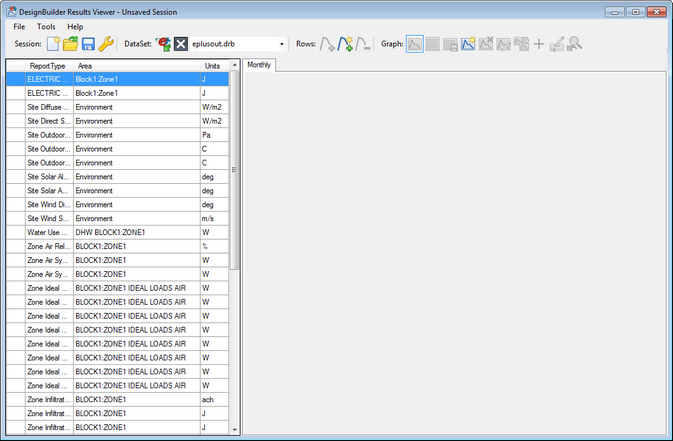
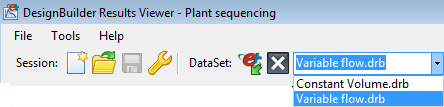
Multiple .eso and .htm files can be opened at a time. Use the combo box below the toolbar to select the current results set for plotting. With an .eso file open the first view will be something like that shown below.
DISPLAY RESULTS To show results for a particular interval use the Frequency drop list to select the interval. Sorting the Reports can be a useful way to help find particular data and can be achieved by clicking on the column headers. For example to see data sorted by "Area" click on the Area header. This will collect together all data for each zone, HVAC component, Environment etc. in the list. To plot a report on a graph use one of these methods:
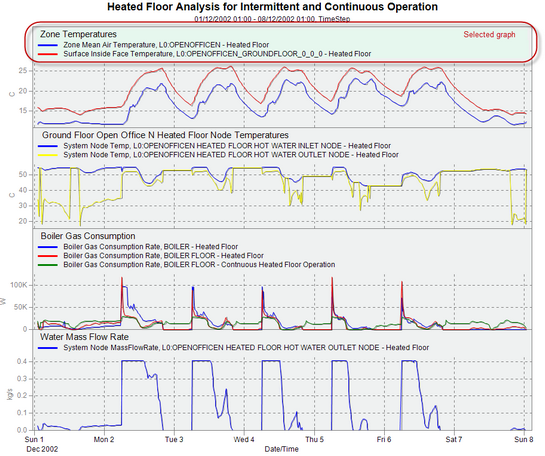
Selecting a graph If you have more than 1 graph set up you can select the current graph simply by clicking on it. You will see the graph heating highlight in a different blue when selected as shown below.
MENU COMMANDS You can access a range of options from the top bar menu, toolbar and right-click context menus. These are as follows: Display grid Display the data as a grid instead of a graph. Display graph Display the data as a graph instead of a grid. Save grid to CSV Allows you to save the data as a comma separated values file for loading into a spreadsheet for further analysis. Copy graphs to another frequency If you have generated similar data for multiple frequencies then use this tool to use settings for the current frequency and display the same reports using a different frequency. Change main title Change the text to be used for the main title for all graphs Rename graph title Allows you to change the title for the currently selected graph. To change the name of the current graph right-click on the graph and from the DesignBuilder Options, select the Rename graph title option. Enter the title for the graph in the dialog and press OK. Remove selected graph Deletes the current graph. Any data displayed in the graph is unaffected. Cross hair on/off Checking this option displayed a cross hair which allows you to create a vertical and horizontal line when you click on a data point. It can be useful to check simultaneous values for a range of reports. Template Load/Save When you create graphs with Results Viewer, they are styled (e.g. Title Font, Background colour, etc) using a default styling template. You can change the styling defaults to your own preferences by using the right-hand context menu on the graph pane. The following options are currently available:
If you make some changes and want to revert back to the default styling at any time, select the Tools > Restore Graph Styling menu option. Any styling changes made to the currently open session will be made permanent once the session has been saved. If you wish to reuse your styling changes, you can save these to a styling template file and apply them to other sessions. Use the Tools> Template > Save option to save your styling template as a standalone file, ie outside of the session (note: the '.drt' file extension is used for styling template files). The Tools > Template > Load option can then be used to apply this style to another session. LOADING MULTIPLE DATA SETS You can load as many data sets as required to a single Results Viewer session by using the Open eso/Dataset menu or toolbar option. A list is maintained of all data sets currently opened in the drop list at the top of the window.
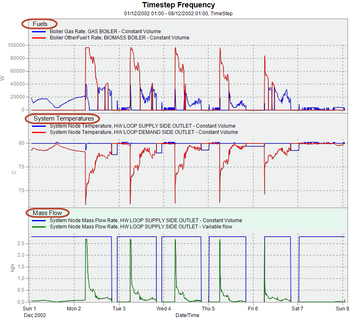
When you have more than one data set open it usually helps to Include the dataset name in the legend. This can be done from the Options dialog. OPTIONS DIALOG The Options dialog is accessed either from the toolbar Autosave session Select this option if you would like the session to be saved automatically when closing the Results Viewer. Display a title for each graph Selecting this option causes the title of each graph to be displayed for each graph as shown in highlighted areas in the graph below.
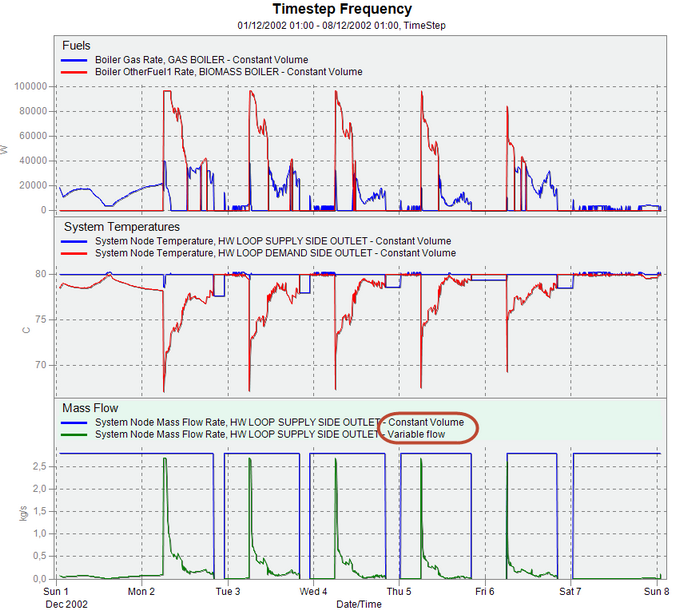
To change the name of the current graph right-click on the graph and from the DesignBuilder Options, select the Rename graph title option. Enter the title for the graph in the dialog and press OK. Include dataset name in legend If you have more than one data set loaded then you should usually select this option to ensure that the data set name is included in the legend. This can help when comparing results for different simulations.
The output above shows how the dataset name is added to each legend. Include folder name in dataset name If you include the dataset name in the legend then do you want the folder name included too? If so check this option. This option is only usually used when the result sets are stored in files with the same name but in different folders. ZOOMING In some cases you may find that too much data is displayed on the X-axis at one time and you need to focus on a section (time period) of the results graph. You can use the mouse to do this simply by dragging a time region of interest. This allows you to zoom in on data for particular days. To return back to the original "un-zoomed" state, use the Undo zoom toolbar option. SESSIONS It can take some time to load.eso files and to select results so DesignBuilder provides methods to save pre-processed results files and session files to speed loading and setting up reports the next time. .drb results files When the Results Viewer loads an .eso file it automatically generates a .drb file with exactly the same data but in a form that can be loaded much more quickly. If you need to view the results again in future you can open the drb file instead of the .eso file. The .drb file will have the same filename as the original .eso file (apart from the extension). It does not contain any display settings - just the data. .drs results files You can also save a session file which stores all of your display settings for a graphing session as well as the corresponding .drb file(s). Opening the session file will take you back to where you were before saving the session file. Session files provide a very useful way to package up all data and settings for a Results Viewer session in a small file size. They can be sent to colleagues for viewing. You can configure DesignBuilder to save.eso files in various ways as described for the EnergyPlus tab of the Program options. If you plan to use the Results Viewer in favour of the inbuilt DesignBuilder results display then you might use one of the settings configurations below:
Axis Video Serveradds 1 Top ~upd~ - Inurl Indexframe ShtmlThe Danger of Google Dorks: Understanding "inurl:indexFrame.shtml Axis" In the world of cybersecurity, sometimes the most powerful tool is a simple search bar. You might have seen the string The term "Google Dorking" (or Google Hacking) involves using advanced search operators to find specific information that isn't intended for public viewing. This specific dork targets Axis Network Cameras and video servers. Here is how the components break down: inurl:indexFrame.shtml: This tells Google to look for pages where the URL contains this specific filename. Axis: Filters results to ensure the brand associated with the page is Axis Communications. video serveradds 1 top: These additional parameters help refine the search to specific server configurations or administrative headers often indexed by search crawlers. Why is this a Security Risk? When a security professional or a hobbyist runs this search, they aren't just finding a website; they are finding live video feeds. Many of these cameras were installed with "plug-and-play" simplicity, meaning they often retain their default factory settings. Default Passwords: Older models often used predictable default credentials (like Privacy Leaks: These cameras might be located in private offices, warehouses, or even homes. Unsecured feeds allow anyone with the link to watch real-time footage without the owner's knowledge. Device Hijacking: Beyond just watching, attackers may attempt to gain "system-level access" to the internal network the camera is connected to, potentially using the camera as a bridge to other sensitive systems. How to Secure Your Axis Devices inurl indexframe shtml axis video serveradds 1 top If you own or manage IP cameras, you can protect them by following the AXIS OS Hardening Guide and these essential steps: AXIS Camera Station 5 - User manual The text you provided is a known Google Dork, a specific search string used by security researchers (and sometimes malicious actors) to find publicly accessible Axis Video Servers and cameras on the internet. Breakdown of the Query:
Researchers use these strings to identify vulnerable IoT devices that have not been properly secured with passwords or firewalls. If you own an Axis device, it is highly recommended to: Change default passwords immediately. Update the firmware to the latest version. Use a VPN or firewall to restrict access to the device rather than exposing it directly to the public web. Are you trying to secure your own Axis device, or Подключаемся к камерам наблюдения - Habr inurl:"ViewerFrame? Mode= intitle:Axis 2400 video server. inurl:/view.shtml. intitle:"Live View / — AXIS" | inurl:view/view.shtml^ Cameras-Long.txt - inurl: ViewerFrame?Mode= intitle: Live View The Danger of Google Dorks: Understanding "inurl:indexFrame The query you provided is a Google Dork (an advanced search string) historically used to locate publicly accessible, unencrypted live feeds of Axis network security cameras on the internet. 🛡️ Why You Should Not Use These Strings Unauthorized Access: Using these strings to view or manipulate private security cameras without permission may constitute a breach of privacy or computer crime laws (such as the CFAA in the US). Cybersecurity Risk: Engaging in this type of scanning often places your own IP address on network logs and exposes you to insecure direct connections. Obsolete Technology: Many of these strings refer to legacy If you own Axis devices and want to ensure they are not exposed to the public internet via Google dorking, follow these best practices: Update Firmware: Regularly check for and install the latest firmware updates from the official Axis Communications Support Page. Change Default Passwords: Never leave your admin or root credentials as the default manufacturer settings. Disable Unused Protocols: Turn off server-side include scripts, anonymous viewing, and legacy web interfaces if they are not needed. Use Secure Remote Access: Utilize AXIS Secure Remote Access rather than port-forwarding your cameras directly to the public web. AXIS P1368-E Network Camera It is important to clarify from the outset: the search query This article will break down exactly what this search means, why these interfaces appear in search engines, the security implications, how to find them (for ethical purposes), and how to secure your own devices. Proof of Concept (What an attacker sees)An attacker searching for this dork will likely encounter:
6. Ethical / Legal NoteScanning for such devices without authorization is illegal in most jurisdictions. Part 7: Why “Adds 1 Top” Persists in Hacker ForumsThe extra text It is functionally useless. The working dork is simply: Adding Security Implications
Part 4: Security ImplicationsFinding these devices is not illegal if you simply stumble upon them passively. However, interacting without authorization (e.g., attempting default logins, changing settings, viewing private video) violates laws such as the Computer Fraud and Abuse Act (CFAA) in the US and similar laws worldwide. Risks for the Finder
5. Current State (2026)Most modern Axis cameras no longer use
Shodan shows thousands of results for
|
 or from the Tools top menu option.